 NovaPep
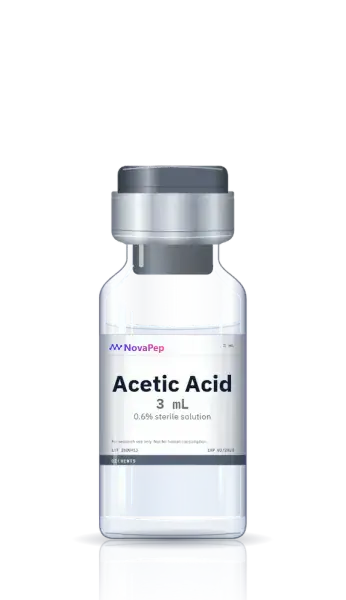
Acetic Acid 0.6%
3 mL
$9
Research use only. NovaPep supplies research-grade peptides for laboratory and in-vitro work only, not for human or veterinary use. By continuing you confirm you are 18 or older and ordering for research.
 NovaPep
In stock in Australia, batch certificate ready
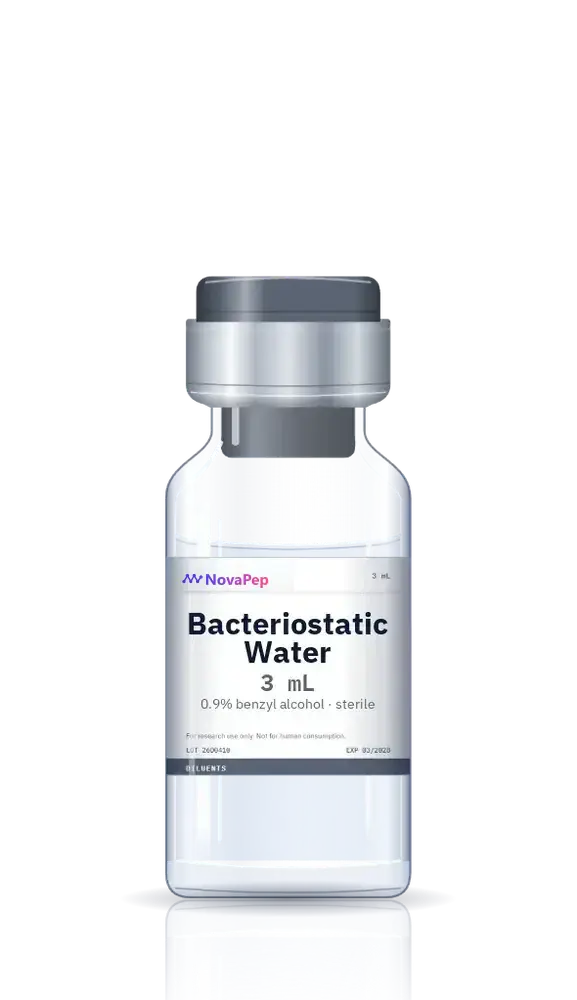
Buy bac water for peptides online in Australia in 3 mL, 10 mL and 30 mL sterile vials, each also available with a U-100 syringe. Bac water for peptides is sterile water preserved with 0.9% benzyl alcohol (C7H8O, 108.14 g/mol, CAS 100-51-6), roughly 9 mg in every millilitre, used to dissolve freeze-dried peptide powder. The preservative prevents bacteria multiplying after the stopper is first pierced, which is what allows a vial to supply many separate draws. Every compound we list arrives as dry powder with no diluent, so it belongs in the same cart as your peptides. Each label prints a lot number and expiry for your records, while the peptides you dissolve carry their own HPLC certificates in the COA library. The peptide calculator turns the volume you add into a concentration, and a pack of insulin syringes makes measured draws easy. Keep sealed vials at room temperature out of the light, then refrigerate once opened. Supplied as a laboratory product to adults 18 and over.
For laboratory research use only. Not for human or veterinary use. Not TGA approved. See the NovaPep research use policy.
In short, bacteriostatic water is sterilised purified water holding a small amount of benzyl alcohol, so that any microbe reaching the liquid cannot reproduce. Laboratories use it to return a freeze-dried peptide cake to solution, and it is made specifically for vials that will be opened repeatedly. Bacteriostatic water is for sale in Australia as 3 mL, 10 mL or 30 mL sterile vials, ready to order online from local stock.
The vial holds a colourless liquid that should look no different from ordinary water. Apart from water, the sole ingredient is benzyl alcohol at 0.9%. That matches the preservative strength of pharmaceutical bacteriostatic water for injection, whose overseas labels usually carry a prescription-only statement plus a caution against use in neonates.
Benzyl alcohol is the most basic aromatic alcohol, a benzene ring bearing a CH2OH group. Water will take up to about 4 per cent of it, so the 0.9 per cent used here dissolves completely and cannot be seen. Its antimicrobial effect comes largely from entering the lipid membranes of fungi and bacteria and making them leaky, which stops division and growth.
At 0.9 per cent that is sufficient to keep organisms in check between draws while remaining mild toward short peptide chains. The alcohol does not kill bacteria at that concentration. It prevents anything introduced on a needle from multiplying, yet it cannot save a solution that has already been contaminated, so careful technique still counts at every draw.
That preservative is the reason the water suits repeated use. A peptide vial made up with preserved water can be drawn from across several weeks in the fridge, whereas unpreserved water is suited to one draw. Over time benzyl alcohol gradually oxidises into benzaldehyde, which carries a bitter almond smell, so an older vial giving off that scent should be swapped out.
It dissolves nearly every water-soluble peptide in our catalogue, from brief tripeptides through to long metabolic chains. Making up a GHK Cu peptide vial with bac water means using this same item, as the blue copper tripeptide dissolves in it easily. Shop bacteriostatic water online in Australia alongside your peptide order, so the diluent arrives with the vials it will dissolve.
There is a limit to its mildness, and it is where the question of which bacteriostatic water is best for peptides becomes more interesting than price or brand. During the mid-2000s, formulation scientists at the University of Colorado studied a freeze-dried recombinant protein, the interleukin 1 receptor antagonist. They showed that 0.9 per cent benzyl alcohol caused it to aggregate more on reconstitution than plain water did.
The alcohol binds loosely to exposed hydrophobic patches, relaxes the folded structure and lets partially unfolded molecules gather together. Short linear peptides like Selank or BPC-157 have no folded core to upset. Bigger folded chains are another story.
For short peptides, any sterile and properly labelled 0.9 per cent product does the job. What really matters is an intact stopper, a printed expiry and a volume your bench can finish in time. Our firmer guidance applies to the exceptions. With folded or longer chains, test a small vial first and watch for haze or reduced recovered concentration before you commit an entire lot to preserved water.
Shelf life and the point at which to change diluents are covered in the full guide comparing bac water with sterile water.
A simple rule covers most benches. Short linear peptides go straight into bacteriostatic water. Larger folded chains deserve a small trial first, watching for haze or a lower recovered concentration. Peptides that stay cloudy at neutral pH need an acidic solvent, and cell work that cannot tolerate benzyl alcohol needs a preservative-free buffer. Writing the diluent and its lot into the method keeps every result traceable.
| Product | Bacteriostatic water |
|---|---|
| Sizes | 3 mL, 10 mL or 30 mL, each with or without one syringe |
| Makeup | Sterile water with 0.9% benzyl alcohol, around 9 mg per mL |
| Preservative | Benzyl alcohol, C7H8O, 108.14 g/mol, CAS 100-51-6 |
| Presentation | Clear liquid in a multi-draw glass vial closed with a rubber stopper and grey flip-off cap |
| Label details | Contents, volume, lot number and expiry date |
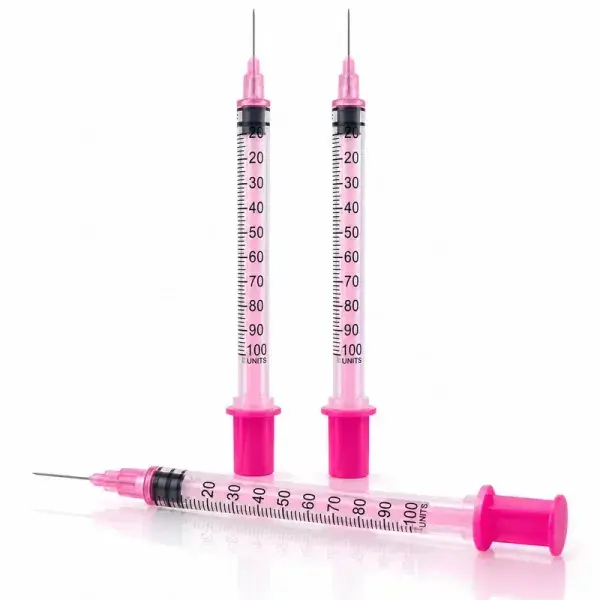
| In the box | One vial in your chosen volume, with a single sterile U-100 1 mL 29G insulin syringe added on the syringe options |
| Storage | Sealed at 15 to 25 °C out of the light and never frozen. Once pierced, hold at 2 to 8 °C and throw out after 28 days |
| Stock status | In stock |
| Intended use | Laboratory reconstitution of research peptides only |
All three sizes come as clear glass vials with a grey flip-off cap over a rubber stopper. Volume is the only distinction between the 3 mL, 10 mL and 30 mL fills. The syringe options include one sterile U-100 1 mL syringe with the same vial rather than a different formula.
Since the water is a consumable and not a peptide, it is not submitted for HPLC or mass spectrometry. What matters is that it is sterile, contains the stated 0.9% benzyl alcohol and can be traced. The printed expiry and lot allow you to note which diluent went into every reconstitution next to the peptide lot. The analysed items are the peptides, each with one certificate for every lot, and our guide to reading a certificate of analysis explains those reports.
For a worked example, adding 2 mL to a 10 mg peptide vial produces 5 mg per mL, meaning a single 10 mL vial covers five such reconstitutions. The technique is set out in our reconstitution guide. Swab the stopper, let the water trickle slowly down the glass, then swirl instead of shaking. Bacteriostatic water for sale in Australia leaves our shelves by tracked post, so it reaches your bench in good condition.
Before mixing, confirm the water is clear and free of particles and that the cap has not been disturbed. Any cloudy vial, or one with a damaged stopper, should be discarded.
Store sealed vials between 15 and 25 °C away from direct light and never freeze them, as ice can loosen the seal or crack the glass. Once pierced, write the date on the label, keep it at 2 to 8 °C and dispose of it after 28 days. Any reconstituted peptide that will be drawn across many sessions is best split into aliquots.
Sterile water contains no preservative and should be used immediately once its seal is broken, so it fits a single reconstitution used that same day. Bacteriostatic water suits any peptide vial that will be drawn from more than once. The two are compared closely in the bacteriostatic water vs sterile water guide.
Two situations call for a different liquid. Cell cultures that are sensitive to benzyl alcohol generally need a preservative-free sterile buffer. The handful of peptides that will not go into neutral solution dissolve better in acetic acid 0.6%, with IGF-1 LR3 being the chief example. For measuring water into a vial, our U-100 insulin syringes read directly against calculator units.
Labs abbreviate it to BW, BAC water or bac water, and catalogues may also call it benzyl alcohol water or preserved sterile water. Chemical suppliers list synonyms for the preservative as well, phenylcarbinol and phenylmethanol, both of which mean benzyl alcohol.
There are two neighbouring products that get confused with it. Bacteriostatic sodium chloride carries the same preservative in a 0.9% saline base, while plain sterile water holds no preservative whatsoever. Whatever a label states, the defining details here are sterile water, 0.9% benzyl alcohol and a stoppered multi-draw vial.
How do Australian labs normally get hold of it? Generally not across a retail pharmacy counter. Australian pharmacies chiefly supply Water for Injections, a preservative-free item listed on the Australian Register of Therapeutic Goods in single-use ampoules. That is unsuited to a vial that will be drawn from for weeks. Benzyl alcohol itself is not a scheduled substance in the Poisons Standard as at October 2026, so this preserved diluent falls outside the scheduling system. Our article on whether Australian chemists stock bac water examines the retail situation more closely.
Because of that gap, most laboratories order bacteriostatic water online from whoever supplies their peptides. NovaPep keeps every size in Australian stock as a laboratory diluent for reconstituting research peptides, sold to adults 18 and over and not for veterinary or human use. We shelve it beside acid diluent and syringes in our lab supplies range, and labs working with acid-loving compounds can choose a 3 mL vial of 0.6% acetic acid instead.
We operate online only, shipping Australia-wide from local stock with same-day dispatch on orders paid before 3pm on business days. Transit times appear on the delivery information page. Where stock permits, taking several vials from one lot keeps a single diluent lot number running through an entire study.
The formula is identical in all three vials, so your decision comes down to the volume your lab will use up within 28 days of first piercing the stopper. Per millilitre, the 30 mL vial is the best value, followed by the 10 mL and then the 3 mL.
Bacteriostatic water is sterile water carrying 0.9% benzyl alcohol, used to dissolve freeze-dried peptides. Thanks to the preservative, one vial supports many draws.
It makes microbial membranes leaky so organisms cannot multiply between draws. It slows growth rather than sterilising a contaminated vial.
It converts lyophilised research peptides into a measurable solution for in vitro work. This is a laboratory product, not for veterinary or human use.
Sterile water has no preservative and allows a single draw only. Bacteriostatic water is what you want when a vial is drawn from again and again.
Hold sealed vials between 15 and 25 °C and never freeze them. After the first puncture, refrigerate and dispose of it after 28 days.
Pick 30 mL, 10 mL or 3 mL from Australian stock, each with an optional U-100 syringe and a printed lot and expiry.
Labs asking what is the best bac water for peptides usually mean a sterile, preserved diluent from a traceable lot. Your best option is preserved bacteriostatic water at 0.9% benzyl alcohol in a stoppered multi-draw vial, since it allows one reconstituted peptide vial to be drawn from across several weeks. We stock 3 mL, 10 mL and 30 mL sizes, all printed with expiry and lot, and the best place to buy bac water for peptides is the same cart as the vials, so everything arrives together.
At 0.9% it enters the lipid membranes of bacteria and fungi and makes them leaky, which stops them dividing. It does not kill organisms outright or rescue a vial that is already contaminated, so clean technique at each draw still matters.
Pick bacteriostatic water any time a reconstituted vial will be drawn from repeatedly, since its 0.9% benzyl alcohol prevents bacteria multiplying between draws. Sterile water carries no preservative and fits single use only, such as when the whole solution is used up on the day it is prepared.
Throw it away 28 days after the stopper is first pierced. While it remains sealed, keep the vial between 15 and 25 °C out of the light and never freeze it. After opening, store at 2 to 8 °C and note the opening date on the label so the cut-off is easy to follow.
No. Because it is a sterile diluent and not a peptide, it does not go through mass spectrometry or HPLC. Every vial is sealed and printed with an expiry date and lot number for traceability. The peptides you dissolve in it each carry a lot certificate in the COA library.
Select the 3 mL, 10 mL or 30 mL vial here, with a syringe or without, and add it to the cart holding your peptides. Pick whichever vial your lab will empty inside 28 days. Anything paid before 3pm on a business day leaves that day with order tracking to all states and territories.
NovaPep
3 mL
 NovaPep
 NovaPep
 NovaPep
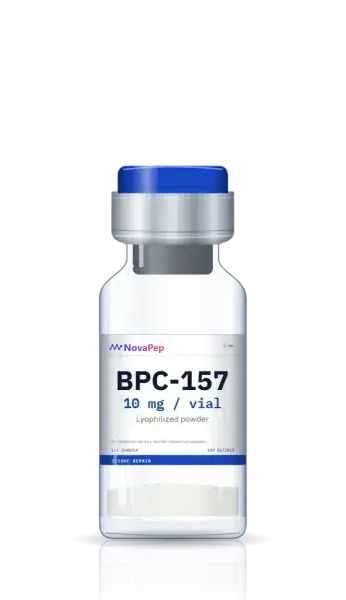
10 mg vial