 NovaPep
TB-500
10 mg vial
$79
Research use only. NovaPep supplies research-grade peptides for laboratory and in-vitro work only, not for human or veterinary use. By continuing you confirm you are 18 or older and ordering for research.
 NovaPep
In stock in Australia, batch certificate ready
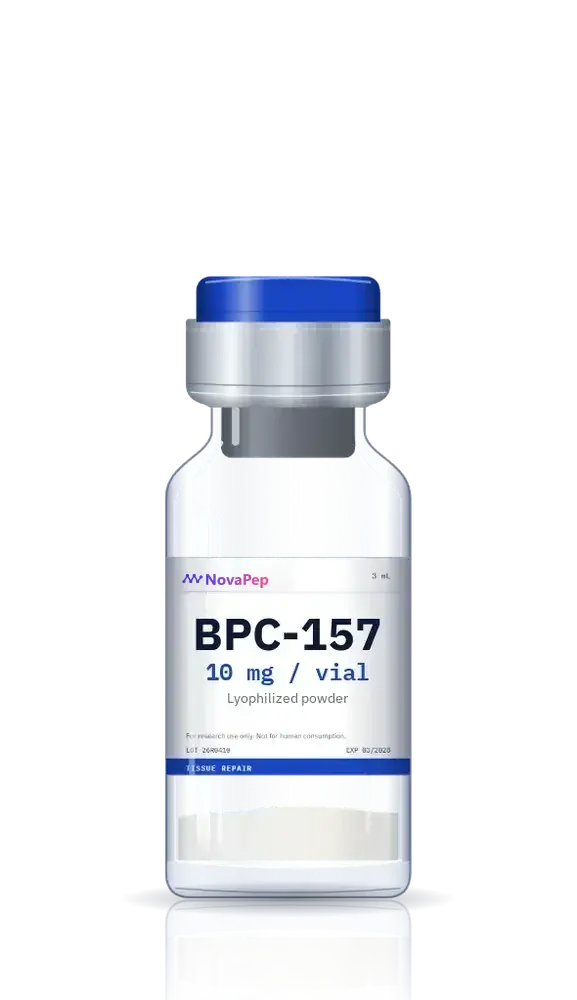
Buy BPC 157 Australia stock online from NovaPep as a 10 mg research vial or a bottle of 60 capsules, each lot tested for identity and purity. BPC 157, which the literature calls body protection compound 157, is a synthetic pentadecapeptide, GEPPPGKPADDAGLV, that reproduces a sequence taken from a gastric juice protein. It has been examined in blood vessel, gut lining and tendon models across more than three decades, with nitric oxide and growth factor signalling the most reported pathways. You can verify its identity markers, C62H98N16O22, 1419.5 g/mol and CAS 137525-51-0, before paying. Mass spectrometry confirms every lot and HPLC measures it, with the matching certificate viewable in our COA library before checkout. Choose the vial for solution work and let the BPC-157 calculator convert any diluent volume into mg per mL. Plenty of labs add TB-500 to the same cart so growth factor signalling can be weighed against actin-driven migration. The vial contains dry powder, so bacteriostatic water should be in the order, whereas the capsules require nothing extra. Store the sealed vial at -20 °C out of the light. Supplied as a research reagent to adults aged 18 and over.
For laboratory research use only. Not for human or veterinary use. Not TGA approved. See the NovaPep research use policy.
BPC 157 is a brief synthetic peptide of 15 amino acids, assembled in the lab to match a single fragment of a protective protein that Croatian scientists isolated from human gastric juice. In chemical terms it is about as simple as research peptides come. It carries no metal ion, no fatty acid tail, no ring and no capped terminus, so whatever a model shows can be attributed to the bare sequence alone. Buy BPC-157 online in Australia as a 10 mg research vial or a bottle of capsules, with the lot certificate published before you order.
BPC-157 copies a 15-residue section of a larger protein originally described in human gastric juice. Most writing on the BPC 157 peptide leads back to Predrag Sikiric and colleagues at the University of Zagreb. They have published since the early 1990s, mainly in rat models of gut lining, muscle, ligament and tendon injury.
The chain is linear, made from natural L-amino acids and left unmodified at each end. It carries a Pro-Pro-Pro triplet toward the N-terminus and a pair of adjacent aspartates in its latter half. That triplet of prolines helps the chain survive acid, which is why it is among the very few research peptides we also offer in capsule form. The simple construction also assists the analyst, since no fatty acid tails or non-natural residues muddy the data.
Most short, unmodified peptides are broken down quickly by acid and digestive enzymes. BPC-157 was reported to remain intact in human gastric juice beyond 24 hours, and its Pro-Pro-Pro triplet helps the chain survive acid. That property explains its use in gut models and why a capsule format exists for research at all.
What, then, does BPC 157 actually do at a molecular level? No one has linked it to a single receptor. Most items on our shelves, from the melanocortins to GLP-1 analogues, function by binding one defined receptor, and BPC 157 has no such documented partner. Mechanism papers consequently describe what changes downstream once it is present. To run this kind of in vitro work, buy BPC-157 online in Australia from lots tested by HPLC and mass spectrometry.
The most frequently repeated signal is nitric oxide generated by endothelial nitric oxide synthase (eNOS). That is the enzyme by which a vessel lining relaxes the vessel and maintains tissue supply. Other teams report raised VEGF receptor 2 levels, the receptor behind new capillary formation. Shifts also appear in egr-1, an early response gene that cells activate within minutes of injury.
Further vocabulary comes from the pathways studied, namely paxillin, FAK, nitric oxide, VEGFR2 and the growth hormone receptor on tendon fibroblasts. Those terms describe mechanisms reported in rodents and cells, not uses. Cell research adds VEGF receptor signalling in endothelial cells and fibroblast outgrowth.
That final gap carries more weight than the sheer number of papers implies. Hundreds of rodent studies have been published, yet most originate from one laboratory network and independent replication remains sparse. The individual papers and their limitations are worked through in our full BPC-157 explainer.
Here is our practical suggestion. Since the receptor remains unidentified, design every BPC 157 study around a measurable pathway endpoint, for instance egr-1 transcription, VEGFR2 expression or eNOS activity, together with the tissue outcome. A model scoring only healing tells you something occurred but never why.
For mechanistic work of that kind the vial outperforms even the finest BPC 157 peptide capsules. A reconstituted solution supports a clean concentration series in culture with no excipients in the well. Keep the research question tight. What does a single stable, well characterised pentadecapeptide alter in a particular tissue model?
Volume and independence are different things here. The rodent literature is large, which explains the interest. Yet most papers come from one network, the mechanism lacks a defined receptor, and human results are absent. Independent replication with well characterised material is the gap that matters most. A study pairing a clear pathway endpoint with a lot-documented reagent adds more than another healing score.
| Compound | BPC-157 (body protection compound 157) |
|---|---|
| Formats | 10 mg lyophilised vial, or a bottle of 60 capsules of 500 mcg each (30 mg total) |
| Sequence | Gly-Glu-Pro-Pro-Pro-Gly-Lys-Pro-Ala-Asp-Asp-Ala-Gly-Leu-Val |
| Chain length | 15 amino acids |
| Formula | C62H98N16O22 |
| Molar mass | 1419.5 g/mol |
| CAS | 137525-51-0 |
| Physical form | Freeze-dried powder sealed in a 3 mL glass vial, or solid capsules in a child-resistant bottle |
| Lot testing | Purity by HPLC and identity by mass spectrometry, with one certificate for each capsule and vial lot |
| In the box | A vial of 10 mg BPC-157 powder with no liquid and diluent sold separately, or a bottle containing 60 capsules |
| Storage | Sealed vial dark at -20 °C and 2 to 8 °C after reconstitution, capsules kept closed, dry and under 25 °C |
| Stock status | In stock |
| Intended use | In vitro laboratory research only |
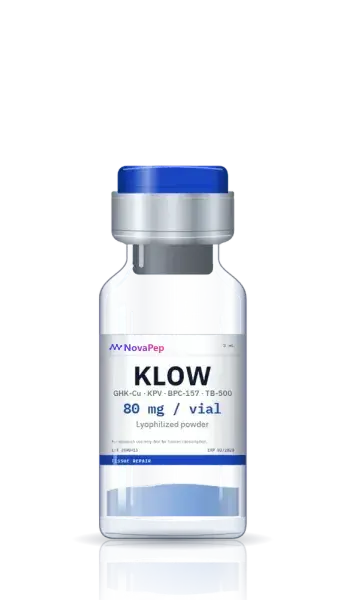
Opening the carton reveals a 10 mg vial holding a small dry white cake of freeze-dried peptide beneath a rubber stopper and blue flip-off cap, with no liquid present. The capsule choice is a child-resistant bottle of 60 units, each containing 500 mcg of the same sequence alongside excipients. The identical peptide also appears inside the Wolverine Blend and the GLOW and KLOW multi-peptide vials.
Read the certificate before buying. Check for a measured mass near 1419.5 g/mol and one dominant HPLC peak, with the purity value printed next to the chromatogram. Every report is stored in our COA library under the lot code on your label.
The vial is the format behind most published injury model research and the obvious first choice, since the concentration is yours to set. BPC 157 ranks near the top of most shortlists of the best peptides for gut and tendon models, and virtually all of that work started with the vial. Holding 30 mg of peptide in total, the capsule bottle suits only protocols requiring an identical 500 mcg solid unit. Excipients form part of the capsule fill, so opening capsules is not a shortcut to a clean solution.
Include bacteriostatic water in the same cart, because the vial holds powder alone. Allow the vial to warm to room temperature, run the diluent down the inner wall of the glass and swirl gently until the cake disappears. Putting 2 mL into the 10 mg vial produces 5 mg/mL, and the BPC-157 reconstitution calculator covers any other volume. When you buy BPC-157 online in Australia, orders paid by 3pm on a business day are dispatched the same afternoon.
Sealed vials are best held at -20 °C in their carton. After reconstitution, keep the solution at 2 to 8 °C and divide it into dated aliquots so the stock vial is opened as seldom as possible. Capsule bottles should stay shut in a dry cupboard below 25 °C.
If a programme will run for months, set one sealed vial aside as a frozen reserve from the same lot as your working material. Later replication then draws on powder backed by an identical certificate, and any difference between runs cannot be explained away by a change of batch. Note the lot code in your method section as well, so the exact material behind each dataset stays traceable.
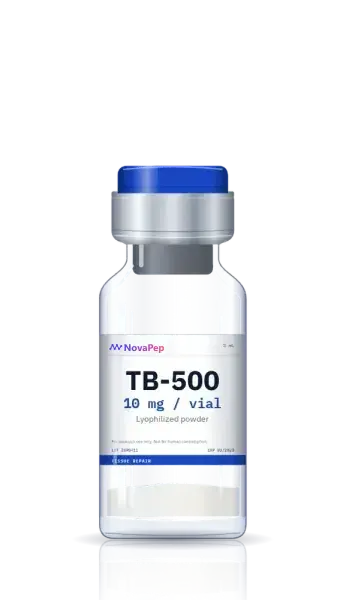
They are bought together so often that confusion is easy, yet structurally they have nothing in common. BPC-157 is a 15-residue gastric sequence studied for nitric oxide and growth factor signalling. TB-500 is a seven-residue acetylated piece of thymosin beta-4 studied for cell migration and actin binding. Use separate vials when each compound requires its own arm and control group.
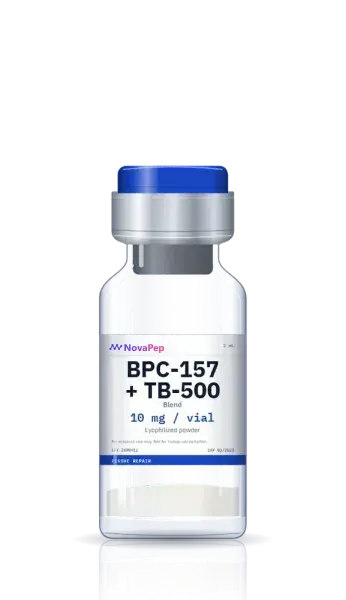
If your protocol already locks the pair at equal amounts, the Wolverine Blend carries 5 mg of each in a single vial. Neither path is inherently superior, and the experiment makes the call. The two mechanisms are placed side by side in our BPC-157 vs TB-500 guide.
BPC-157 is also unrelated to copper peptides like GHK-Cu, although the two frequently share a freezer shelf in repair work. Listings for BPC 157 copper peptides generally mean a premixed vial such as the GLOW peptide blend, in which both occupy one cake. Queries phrased as BPC 157 vs collagen peptides pit one defined chain against a hydrolysed ingredient class, and that answer sits in the FAQ below.
Suppliers list the same compound as body protection compound 157, BPC157, BPC 157 or BPC-157, and the transposed spelling BCP-157 also points to it. Older literature uses the phrase pentadecapeptide BPC 157 or the development code PL 14736. All of those names denote the sequence GEPPPGKPADDAGLV with CAS 137525-51-0.
So, is BPC 157 legal in Australia? As at October 2026 it appears in Schedule 4 of the Poisons Standard (prescription only), an entry that commenced on 1 June 2024 following the November 2023 scheduling committee meeting. The Australian Register of Therapeutic Goods includes no product containing it, so no registered BPC-157 medicine exists for a pharmacy to dispense. The TGA has made unapproved peptides an enforcement focus. For sport, WADA lists it under S0 (non-approved substances), a list applied by Sport Integrity Australia. The scheduling history is covered more fully in our BPC-157 legal status guide.
Shoppers comparing the best BPC-157 peptide capsules or the best brand of BPC 157 peptide should look for a lot certificate first. For many designs the best form of BPC 157 peptide is still the vial, because the lab sets the concentration.
That regulatory gap explains why BPC 157 Australia searches arrive at research reagent suppliers instead of chemists. NovaPep keeps vials and bottles here as laboratory reagents, sold only to adults 18 and over and never for veterinary or human use. Anybody considering BPC-157 for sale in Australia should read a research label as a statement of purpose rather than a workaround for the schedule. Please go through our research use policy before ordering, and see the recovery peptides range for compounds commonly bought beside it.
For anyone asking about BPC 157 where to buy near me, we operate no shopfront or collection counter. We serve every state and territory from local stock, so a lab purchasing research peptides in Hobart uses the same page and the same stock as one in Darwin. Anything ordered before 3pm on a business day departs that afternoon with tracking, as explained on our delivery information page. Order all the vials for a long series together and, wherever stock allows, one certificate covers the entire study.
Most searches for BPC 157 where to buy in Australia end with a second question, which label to trust. The best BPC 157 peptide brand is not a logo. It is a lot you can verify, with mass spectrometry matching 1419.5 g/mol and HPLC stating purity before you pay.
So who makes the best BPC 157 peptide? Judge any supplier by the paperwork. NovaPep has every lot tested by an independent laboratory and files the certificate under the lot code on your vial in the COA library. That is what makes a store the best place to buy BPC 157 peptide, rather than reviews or price alone. Anyone comparing the best BPC 157 peptides online should request that document first.
Labs comparing formats often ask us for the best oral BPC 157 peptide. Our 60 capsule bottle holds 500 mcg in each capsule, a research format for designs that need a fixed solid unit. The 10 mg vial suits solution work instead. Either way, the BPC 157 peptide best suited to your study is the one whose certificate matches the lot in your hand.
BPC-157 is a synthetic 15 amino acid chain copied from a protein found in stomach juice. It is a study molecule with a lengthy cell culture and rodent record.
Papers describe downstream changes instead, chiefly eNOS-derived nitric oxide, VEGF receptor 2 and the early response gene egr-1.
Rodent models of gut lining, muscle, ligament and tendon, plus endothelial and fibroblast cell cultures. These are laboratory findings with no medical standing.
TB-500 is a shorter piece of thymosin beta-4 that acts on cell movement and actin. The two are not substitutes, which is why many orders contain both.
Sealed vial in the freezer, solution in the fridge as aliquots, capsules in a dry cupboard. A prepared solution should never be refrozen.
Order the 10 mg vial or 60 capsules of 500 mcg, each lot verified by HPLC and mass spectrometry with the certificate open before checkout.
It acts as a stable synthetic pentadecapeptide tool compound in tissue repair research. Labs add it to endothelial and fibroblast cell cultures and replicate published rodent models of gut, muscle and tendon injury. Supply is strictly for laboratory and in vitro work, never for use in animals or people.
No single receptor has been identified. Studies instead report downstream changes, most often nitric oxide from endothelial nitric oxide synthase, raised VEGF receptor 2 and shifts in the early response gene egr-1. That is why a pathway endpoint belongs in any BPC-157 study design.
It does not. Collagen peptides are assorted fragments of hydrolysed animal collagen, sold by weight with no single defined sequence. BPC-157 is one synthetic 15 amino acid chain with a measured mass and its own CAS number. Comparing collagen peptides vs BPC 157 therefore sets a broad ingredient class against a characterised research reagent.
Yes, every BPC-157 lot carries its own certificate. An independent laboratory verifies the mass by mass spectrometry and measures purity by HPLC, with the report filed under the lot code on your capsule bottle or vial. View it in the COA library before ordering and save a copy for your notebook.
That cannot be decided by brand name, only by lot data. Buy from a supplier that verifies mass by mass spectrometry, states purity by HPLC and publishes the certificate under the vial's lot code before you pay. Every NovaPep lot holds to that standard, so you assess the material itself instead of the marketing.
Add either the 10 mg vial or the 60 capsule bottle to your cart on this page and complete checkout. Stock sits in Australia, anything ordered before 3pm on a business day leaves that afternoon with tracking to regional and metro addresses, and bacteriostatic water for the vial can travel in the same order. All buyers must be 18 or older.