 NovaPep
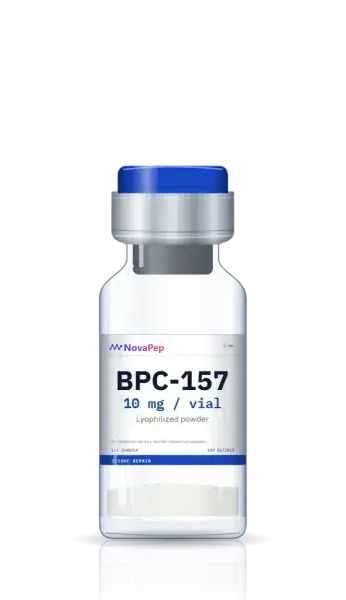
BPC-157
From $69
Research use only. NovaPep supplies research-grade peptides for laboratory and in-vitro work only, not for human or veterinary use. By continuing you confirm you are 18 or older and ordering for research.
 NovaPep
In stock in Australia, batch certificate ready
Size: 80 mg vial
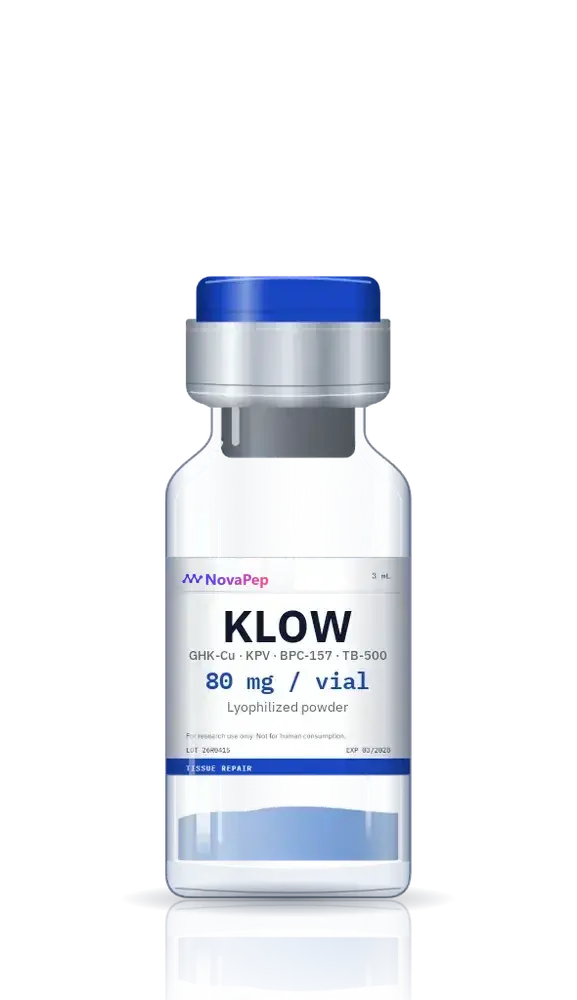
Buy KLOW peptide online in Australia as an 80 mg research vial blending GHK-Cu, KPV, BPC-157 and TB-500, tested on every lot. KLOW peptide is a research blend of four peptides dried together in one 80 mg lyophilised vial at a set 50 to 10 to 10 to 10 ratio. The stack pairs 50 mg of GHK-Cu, the copper-binding Gly-His-Lys tripeptide, with 10 mg of KPV (Lys-Pro-Val, CAS 67727-97-3), 10 mg of BPC-157 (CAS 137525-51-0) and 10 mg of TB-500, the acetylated fragment of thymosin beta-4 (CAS 885340-08-9). Copper gives the cake its blue colour, an easy visual sign that the GHK-Cu portion is there. It is available online in Australia from local stock. Each lot is run through mass spectrometry for all four peptides plus an HPLC purity test, and you can read the certificate before checking out. Our peptide calculator helps divide a reconstituted volume into the concentration of each component. If KPV is not needed, weigh it up against the three-peptide GLOW blend. The vial holds powder only, so put a diluent like bacteriostatic water in your cart as well. Store it sealed and dark at -20 °C until needed. NovaPep sells this research reagent to buyers aged 18 and over.
For laboratory research use only. Not for human or veterinary use. Not TGA approved. See the NovaPep research use policy.
KLOW is a pre-blended research vial carrying four peptides in one blue cake. These are GHK-Cu, the copper tripeptide, KPV, a fragment of alpha-MSH, the 15-residue BPC-157, and TB-500, a piece of thymosin beta-4. The leading K stands for KPV, the single ingredient missing from the three-peptide GLOW vial, so in short, the GHK-Cu vs KLOW peptide difference is that KLOW is GHK-Cu with three partners added. You can order the KLOW blend online in Australia as an 80 mg research vial, and every lot ships with its own certificate.
Set the branding aside and KLOW is a single glass vial containing one blue cake, made up of 50 mg of copper-bound GHK plus TB-500, BPC-157 and KPV at 10 mg apiece, totalling 80 mg of powder. No liquid is supplied, and the label lists no filler or fifth compound. KLOW is a naming convention used by suppliers, not a compound described in the literature, so there is no developer or paper behind KLOW itself. Each ingredient carries its own background and its own legal status into the vial.
These figures reveal what the milligram ratio conceals. Counted as molecules, GHK-Cu outnumbers BPC-157 about 18 to 1, and nearly three quarters of all molecules in solution are the copper peptide. In effect KLOW acts as a copper peptide preparation with three smaller partners, which matters whenever a result is credited to the whole blend.
Every ingredient has its own research background, and together they are meant to span four stages of the repair cascade examined in wound and skin models. GHK-Cu, which Loren Pickart identified in human plasma in the 1970s, binds copper(II) firmly and is studied for matrix and collagen turnover in fibroblasts. KPV, the final three residues of alpha-MSH, is investigated in epithelial cells for its ability to calm inflammation driven by NF-kappa B. BPC-157 carries decades of rat gut and tendon injury research, much of it focused on blood vessel signalling. TB-500 covers the actin step that allows cells to move. This vial was designed for models that follow matrix, inflammation, blood supply and migration all at once.
No published study has looked at this precise four-part mixture. Any KLOW peptide benefits for skin described so far therefore come from testing the components separately, in keratinocyte and fibroblast cultures and in rodent wound models, where wound closure speed, cytokine release and collagen synthesis are common endpoints. Work on KLOW peptide for skin research traces back to that same single-component literature. Every vial is a reagent, and none of the four has TGA approval. Labs planning similar studies can order the KLOW blend online in Australia, with identity and purity confirmed on every lot.
We suggest running KLOW next to an arm containing only GHK-Cu, matched for copper peptide concentration. Leave that control out and nobody can tell a wound or skin result from the blend apart from the effect GHK-Cu would have had by itself. KLOW is listed with our ready-mixed peptide blends and in our peptides for skin and hair research.
It is a fixed-ratio reagent for teams studying cell migration, epithelial inflammation and matrix remodelling together, usually in wound or skin models. A single vial, reconstitution and certificate cover four compounds. It is sold only for in vitro and laboratory work, never for people or animals.
| Product name | KLOW blend (GHK-Cu with TB-500, BPC-157 and KPV) |
|---|---|
| Size | 80 mg lyophilised vial |
| Components | GHK-Cu is the Gly-His-Lys copper complex, KPV is Lys-Pro-Val, BPC-157 is GEPPPGKPADDAGLV and TB-500 is Ac-LKKTETQ |
| Residues | 3, 3, 15 and 7 residues respectively |
| Formulas | GHK-Cu C14H22CuN6O4, KPV C16H30N4O4, BPC-157 C62H98N16O22, TB-500 C38H68N10O14 |
| Molecular weights | GHK-Cu about 401.9 g/mol, KPV 342.4 g/mol, BPC-157 1419.5 g/mol, TB-500 889.0 g/mol |
| CAS | KPV 67727-97-3, BPC-157 137525-51-0, TB-500 885340-08-9 |
| Presentation | Sealed clear 3 mL glass vial holding a blue freeze-dried cake |
| Quality checks | All four peptides confirmed by mass spectrometry, plus HPLC purity, one certificate per lot |
| In the box | One vial, no diluent, holding GHK-Cu 50 mg plus TB-500, BPC-157 and KPV at 10 mg apiece |
| Storage conditions | Unopened at -20 °C, protected from light, then 2 to 8 °C once in solution |
| Stock status | In stock |
| Intended purpose | Bench and in vitro research only |
KLOW makes sense when your protocol already calls for all four compounds at this ratio, since a single reconstitution and a single certificate take the place of four. If any one ingredient needs to change, the individual vials are the better buy.
A four-component blend demands more of its testing than a single peptide does, because the report must show that every part is present. Each lot certificate gives a mass match for all four, TB-500, BPC-157, KPV and GHK-Cu, along with an HPLC trace showing the individual peaks and the purity result. Colour offers a second check, as copper attached to GHK-Cu tints both the dry cake and the solution blue, so a white cake labelled KLOW would suggest the copper peptide is absent.
Look up your report by lot code in our COA library before buying. GHK-Cu accounts for five eighths of the fill, which is why its peak towers over the rest of the chromatogram. The three 10 mg ingredients appear as smaller, clearly separated peaks that must all be there. This is also the fairest test of the best KLOW blend from any seller, because with four mass matches published, nothing has to be taken on trust.
Add bacteriostatic water for reconstitution to your order, let the vial warm to room temperature and run the liquid down the inside of the glass before swirling. With such a large fill, a bigger volume is convenient. A 4 mL addition to the 80 mg vial produces 20 mg/mL overall, which is 12.5 mg/mL GHK-Cu with TB-500, BPC-157 and KPV each at 2.5 mg/mL. Work out the total for other volumes with the peptide reconstitution calculator, then apply the fixed ratio to split it. Order the KLOW blend online in Australia and it travels by tracked Australia Post from our local stock.
Unopened vials belong in the freezer at -20 °C, left in their box. Once dissolved, the blue liquid should sit in the fridge at 2 to 8 °C, split into light-protected aliquots, and it must never be refrozen.
The copper ion attached to GHK-Cu colours both the dry cake and the dissolved solution. A real KLOW vial should always appear blue. If something sold under this name turns up white, the copper peptide is probably absent, and the certificate is worth checking carefully.
The GLOW peptide blend comes as a 70 mg vial and contains the same GHK-Cu, BPC-157 and TB-500 trio in a 50 to 10 to 10 split. KLOW simply adds 10 mg of KPV on top for a little more money. Pick KLOW when epithelial inflammatory signalling is part of your question, and otherwise GLOW covers the same territory with one less variable. Our GLOW vs KLOW guide sets out the two fills in detail.
Buy GHK-Cu on its own when the entire study is about the copper peptide, because a blend brings three extra variables you may not want. Where the plan calls only for the two repair peptides, choose the Wolverine Blend as the more straightforward vial.
Other sellers call this vial the KLOW copper peptide blend, KLOW blend peptide, KLOW 80 peptide, the KLOW stack or just KLOW, while some lists simply name the contents, GHK-Cu with TB-500, BPC-157 and KPV. Whatever the label, it means the same four compounds mixed at 50 to 10 to 10 to 10.
Related vocabulary is inherited from each ingredient. TB-500 is described as a thymosin beta-4 fragment, BPC-157 as body protection compound, KPV as alpha-MSH (11-13), and GHK-Cu as copper tripeptide-1 or glycyl-histidyl-lysine.
Only one fill is offered, an 80 mg vial. Buying KPV, TB-500, BPC-157 and a 50 mg GHK-Cu one by one would cost far more than one KLOW vial. When all four already feature in your plan, the blend is the cheaper path.
Place one order for every vial in a series so they share a lot where stock permits, keeping the four-way ratio identical from the first run to the last with just one certificate in your lab book. Only adults aged 18 and over may buy, and age is confirmed at checkout.
Where a KLOW blend peptide GHK-Cu BPC-157 TB-500 KPV vial is concerned, the most restricted ingredient sets the overall position. Since 1 June 2024 BPC-157 has been listed in Schedule 4 of the Poisons Standard, and thymosin beta-4 together with its TB-500 fragment also hold Schedule 4 (prescription only) entries. GHK-Cu was among five peptides named by the TGA when it warned in April 2026 about unapproved peptide products absent from the ARTG. Nor does KPV have any approved therapeutic use in Australia. As of October 2026 none of the four appears in a registered Australian medicine, and in sport WADA prohibits TB-500 under S2 and BPC-157 under S0.
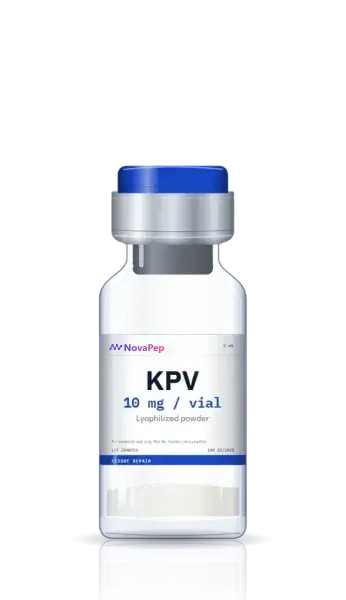
Taken together, this is why anyone looking for KLOW peptide Australia supply ends up with research suppliers. NovaPep stocks the 80 mg vial in Australia purely as a lab reagent, which adults 18 and over may purchase for in vitro research, and it is never for human or veterinary use. If your lab wants to buy KLOW peptide Australia stock for a single-variable study, you will be better served by the KPV peptide 10 mg vial by itself. Our guide comparing GLOW and KLOW explains what the additional component changes.
NovaPep is an online-only store without a collection point, and we send KLOW to all states and territories from Australian stock. Orders placed before the 3pm business-day cut-off ship the same afternoon with tracking, so a lab ordering peptides in Adelaide and another in Townsville get the same lot-tracked stock.
KLOW adds TB-500, BPC-157 and KPV to the copper peptide GHK-Cu. The blue colour of the powder comes from the copper.
Each sealed vial carries 50 mg of GHK-Cu, with the remaining three at 10 mg apiece. Bacteriostatic water is a separate item for the same cart.
Rodent and cell culture models of skin and wounds, where migration, inflammation and matrix signals are measured together. It is for lab use only.
GLOW is a 70 mg vial of the same three peptides with no KPV. KLOW fits protocols that include a KPV arm.
Freeze unopened vials and refrigerate the blue solution in dark aliquots. The calculator splits the total concentration into each component.
Mass spectrometry checks every peptide in each lot and HPLC measures purity, with the certificate online before you buy.
KLOW is a research blend of four peptides lyophilised together in one 80 mg vial. The KLOW blend peptides are 50 mg of GHK-Cu plus 10 mg each of BPC-157, TB-500 and KPV. That KLOW peptide blend composition, GHK-Cu, BPC-157, TB-500, KPV, is confirmed for every lot by mass spectrometry, with HPLC measuring purity.
Each covers a different stage studied in wound and skin models. GHK-Cu is researched for matrix and collagen turnover, KPV for NF-kappa B driven inflammation in epithelial cells, BPC-157 for blood vessel signalling and TB-500 for actin-driven cell movement. No study has tested this exact mixture.
GHK-Cu is one copper tripeptide, which we also sell alone in 100 mg and 50 mg vials. KLOW contains 50 mg of that GHK-Cu with TB-500, BPC-157 and KPV added at 10 mg apiece in a locked ratio. Use GHK-Cu alone for copper peptide work, and KLOW only when the design needs all four.
Yes. An independent lab runs mass spectrometry on every lot to confirm each of the four peptides, then records purity by HPLC. Each certificate matches the lot code printed on your vial and can be found in our COA library, so you can check all four matches before you order.
Order online right here, because NovaPep has no shopfront and this one page serves every regional town and city. Each parcel is packed in our Australian warehouse from the current lot, whose certificate is already published, and tracked shipping reaches all states and territories. See our shipping information page for timeframes.
NovaPep gives no KLOW dosage or KLOW dosing advice, because the blend is sold for in vitro research only and never for people or animals. A KLOW peptide dose, or KLOW peptide dosing for personal use, is outside what a research supplier can answer. If you searched KLOW peptide blend dosage, GHK-Cu, BPC-157, TB-500, KPV ratios, the fixed split is 50 to 10 to 10 to 10 by weight. The peptide calculator turns that split into mg per mL for each component once the cake is dissolved.
NovaPep
 NovaPep
10 mg vial
 NovaPep
10 mg vial
 NovaPep
10 mg vial