 NovaPep
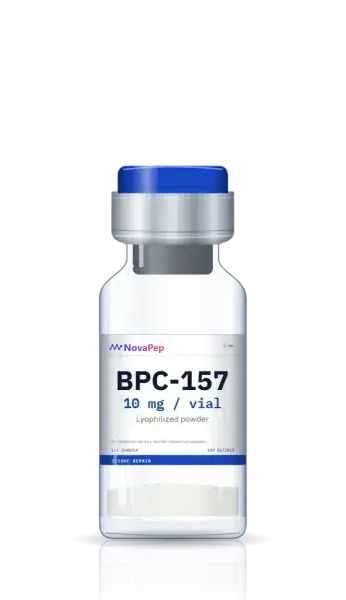
BPC-157
From $69
Research use only. NovaPep supplies research-grade peptides for laboratory and in-vitro work only, not for human or veterinary use. By continuing you confirm you are 18 or older and ordering for research.
NovaPep holds recovery peptides for sale in Australia, including BPC-157 as a vial or capsules, TB-500, KPV, the Wolverine blend, KLOW, Cartalax and ARA-290, all in local stock. The collection spans tissue repair models as well as the best peptides for inflammation research. An independent laboratory tests every lot, each one has a certificate of analysis matching its lot number, and orders ship from inside Australia.
NovaPep
 NovaPep
10 mg vial
 NovaPep
10 mg vial
 NovaPep
10 mg vial
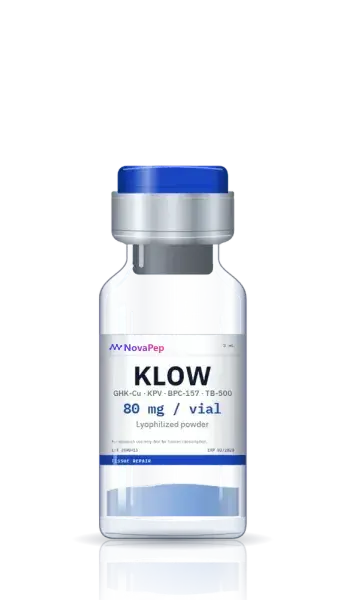 NovaPep
80 mg vial
 NovaPep
10 mg vial
 NovaPep
20 mg vial
Start with the two repair compounds that have the most research behind them. TB-500 is a synthetic peptide modelled on thymosin beta-4, a G-actin binding protein investigated for angiogenesis and cell migration. BPC-157 is a sequence of 15 amino acids derived from a protein present in gastric juice. Researchers have examined it in rodent models of gut, tendon, ligament and soft tissue injury for roughly thirty years, so it is the standard reply when labs ask for the best peptide for tendon repair research. TB-500 is studied mainly for the way cells move into a damaged area, while BPC-157 is studied for what goes on inside injured tissue and its blood supply, and that difference explains why so many projects use both. For a direct comparison, see our guide to BPC-157 vs TB-500.
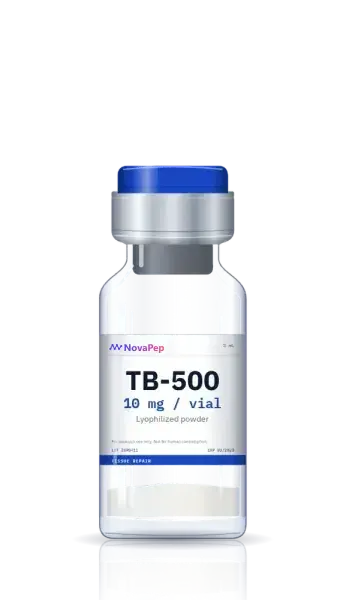
BPC-157 is sold as a 10 mg vial if you want to set your own concentration. If your design follows an oral route with no reconstitution, it also comes as a bottle of 60 capsules of 500 mcg each. It is remarkably stable in acid, which is why it is one of the very few repair peptides available as capsules, and why it is a frequent pick among the best peptides for gut health models. TB-500 comes as one 10 mg vial. Buy BPC-157 online in Australia in either format, and match the lot code on the vial or bottle to its certificate.
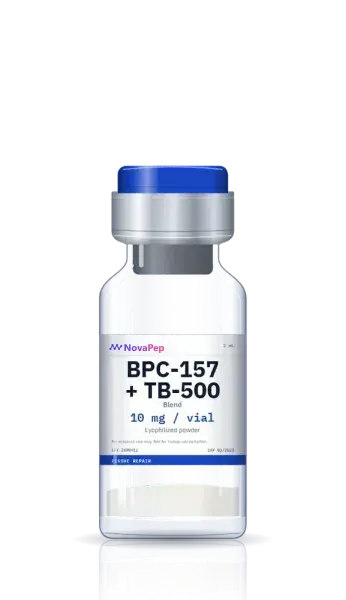
The Wolverine blend puts BPC-157 and TB-500 together in a single 10 mg vial, so one reconstitution delivers both peptides at a fixed ratio. KLOW takes the idea further by including the copper peptide GHK-Cu and the tripeptide KPV, giving an 80 mg vial that is mostly GHK-Cu by weight. Premixed vials reduce the number of vials, reconstitutions and certificates you need to manage, but the ratio is locked once made. Use single vials when your protocol compares the peptides with one another, and a blend only when your method already specifies that combination. You will find further premixed options in our peptide blends collection. Order the Wolverine blend online in Australia or KLOW from the same local stock, both tested component by component.
Three compounds tackle repair from the inflammation angle, and together they are our recommendation when labs ask about the best peptides for inflammation models. ARA-290, also known as cibinetide, is an 11 residue peptide based on the helix B surface of erythropoietin, supplied as a 10 mg vial. It acts on the innate repair receptor without the red cell signalling of its parent hormone and has progressed to early clinical trials in small fibre neuropathy, making it the best peptide for nerve repair designs in this range. KPV is the Lys-Pro-Val tail of alpha-MSH, transported into gut cells by PepT1 and investigated for NF-kappaB signalling in mouse colitis studies. It comes as a 10 mg vial and is also listed with our immune peptides. BPC-157 rounds out the trio by covering inflammation within broader tissue injury models. You can buy ARA-290 online from our Australian stock, tracked to any state.
Cartalax is a short bioregulator that came out of the St Petersburg school of peptide research and is used in cartilage and chondrocyte gene expression models. Its sequence is the tripeptide Ala-Glu-Asp, and the 20 mg vial is an inexpensive addition to any joint study that already uses BPC-157. Shop Cartalax online in Australia and its certificate gives the mass figure that separates it from Epitalon.
Choose according to the tissue and the readout. Gut, tendon and ligament injury models usually open with BPC-157, and cell migration or wound closure work brings in TB-500. If inflammatory markers are the primary endpoint, KPV is the most focused and cheapest choice, whereas ARA-290 suits neuropathic pain and nerve injury designs. For joint structure and cartilage, look to Cartalax, and for dermal repair work that needs a copper peptide arm, KLOW fits. When one compound must serve as the baseline for later arms, BPC-157 offers the richest rodent literature in this range.
Where one project covers two mechanisms, order in pairs, for example BPC-157 and TB-500 for soft tissue, BPC-157 capsules and KPV for gut models, or ARA-290 alongside BPC-157 for nerve studies. Keeping each compound in its own vial separates the arms, so you can attribute any effect to a single peptide.
Lists of the best healing peptides tend to name the same few compounds, but the right vial depends on the tissue in your model. For labs asking what is the best peptide for healing research, BPC-157 and TB-500 are the usual starting pair. Together they are often called the best peptides for injury recovery studies, since they cover repair inside tissue and cell migration into it.
Connective tissue models narrow the shortlist. BPC-157 is the most cited candidate when groups look for the best peptide for healing tendons, the best peptide for tendonitis or the best peptide for ligament repair in rodents. The same compound anchors most work behind searches for the best peptides for healing tendons, the best peptide for shoulder injury and the best peptides for knee injury. TB-500 is the usual partner in best peptide for wound healing designs, as it is studied for cell migration and wound closure. TB-500 is for sale in Australia as a lyophilised 10 mg vial, with mass spectrometry confirming each lot.
Joint and bone designs add Cartalax. Labs seeking the best peptides for cartilage repair, the best peptide for joint repair or the best peptides for joints often pair it with BPC-157. That combination also suits degenerative and bone models, so it appears in shortlists for the best peptides for osteoarthritis. It is also a common answer for the best peptide for bone repair and the best peptides for bone healing.
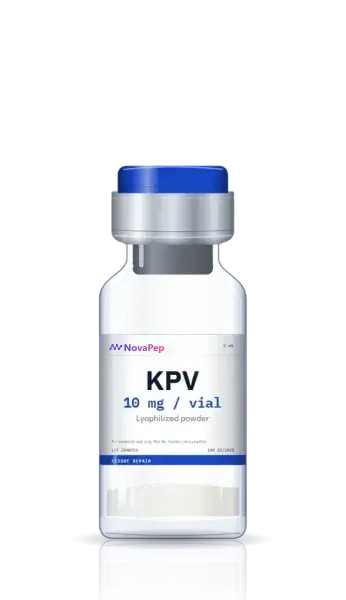
Gut models lean on BPC-157 capsules and KPV. BPC-157 is often described as the best peptide for gut healing research because it stays stable in acid. KPV is the focused choice when the endpoint calls for the best peptide for gut inflammation, given its colitis literature. Between them they answer most questions about the best peptide for gut health. KPV for sale in Australia ships as a 10 mg vial, each lot backed by its own certificate of analysis.
For nerve work, ARA-290 is the vial labs order when looking for the best peptide for neuropathy or the best peptide for nerve damage. It has been studied in small fibre neuropathy and suits designs on the best peptides for nerve regeneration. Searches for the best peptides for brain health are better served by our nootropic peptides.
Inflammation endpoints vary by scale. KPV is the focused pick for the best peptide to reduce inflammation in cell models. ARA-290 suits labs asking about the best peptide for systemic inflammation, given its innate repair receptor work. For organ models, groups searching for the best peptide for heart health or the best peptides for liver health often add SS-31 or BPC-157.
Review the documentation before you buy, because imitation BPC-157 and TB-500 are widespread. NovaPep sends every lot to an external laboratory for HPLC, which provides the purity result, and mass spectrometry, which verifies the sequence, and both blends are tested component by component instead of as a single combined number. Match the lot code on your vial or capsule bottle to its report in our COA library. Orders that clear before 3pm on a business day are packed and sent that afternoon, tracked to any address in Australia.
If you are buying vials, add bacteriostatic water to the same order. Every recovery peptide on this page is supplied to adults 18 and over for in vitro laboratory research only, and none carries TGA approval.
| Peptide | Sizes available | Format | Best for |
|---|---|---|---|
| BPC-157 | 10 mg vial or 60 capsules | Lyophilised powder or capsules | Tissue repair, injectable or oral designs |
| TB-500 | 10 mg | Lyophilised powder | Cell migration and repair models |
| Wolverine Blend, BPC-157 and TB-500 | 10 mg | Lyophilised powder | Both repair peptides in one reconstitution |
| KPV | 10 mg | Lyophilised powder | NF-kappaB inflammation research |
| KLOW | 80 mg | Lyophilised powder | Repair plus copper and KPV in one vial |
| ARA-290 (Cibinetide) | 10 mg | Lyophilised powder | Nerve repair designs |
| Cartalax | 20 mg | Lyophilised powder | Joint studies alongside BPC-157 |
NovaPep keeps BPC-157 in Australian stock as a 10 mg vial or a bottle of 60 capsules. Each lot is tested independently for identity and purity and comes with a certificate matching its lot number. When you pay before 3pm on a business day, your BPC-157 ships that day with tracking.
The most targeted option is ARA-290, also known as cibinetide. Based on the helix B surface of erythropoietin, it works on the innate repair receptor without driving red cell production, and it has entered early clinical trials in small fibre neuropathy. It is sold as a 10 mg vial and is frequently paired with BPC-157 in nerve injury models.
For inflammation models, labs most often use KPV, BPC-157 and ARA-290. KPV is the most targeted, working on NF-kappaB signalling in skin and colitis research, and comes as a 10 mg vial. ARA-290 is investigated in systemic and neuropathic inflammation, while BPC-157 covers inflammation inside tissue injury models. Each is sold as a laboratory reagent only.
It combines BPC-157 and TB-500 in a single 10 mg lyophilised vial from NovaPep. Reconstituting it once produces a solution of both peptides in a set ratio, and the lot certificate confirms the identity of each component. If your study needs to adjust or compare the two peptides separately, buy individual vials instead.
Choose the vial when you want complete control over concentration, and the capsules when your design uses an oral route. The lyophilised 10 mg vial is dissolved in bacteriostatic water. The 60 capsule bottle, with 500 mcg in each capsule, needs no reconstitution and contains 30 mg of BPC-157 altogether.
KPV, ARA-290 and BPC-157 are the three compounds labs shortlist as the best anti-inflammatory peptides. If you are asking what are the best peptides for inflammation in a specific model, match KPV to NF-kappaB and colitis work, ARA-290 to systemic and neuropathic models, and BPC-157 to tissue injury. All three are research reagents only.
Cartalax and BPC-157 are the usual pairing in cartilage and joint models, and KPV adds an inflammatory marker arm. For labs asking about the best peptide for rheumatoid arthritis, an autoimmune model, KPV and ARA-290 fit the inflammation side. None of these products is a treatment, and NovaPep sells them for laboratory research only.
NovaPep does not make treatment claims or give dosing advice. In the research literature, the best peptide for joint pain models depends on the cause. Cartalax suits cartilage and chondrocyte work, BPC-157 suits ligament and tendon injury, and ARA-290 suits neuropathic pain designs.