 NovaPep
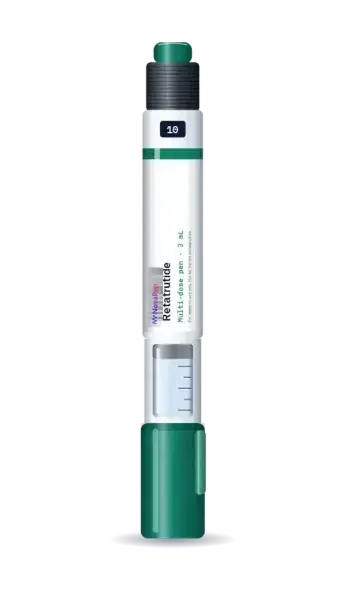
Retatrutide Pen
10 mg pen, 3 mL
$149
Research use only. NovaPep supplies research-grade peptides for laboratory and in-vitro work only, not for human or veterinary use. By continuing you confirm you are 18 or older and ordering for research.
 NovaPep
In stock in Australia, batch certificate ready
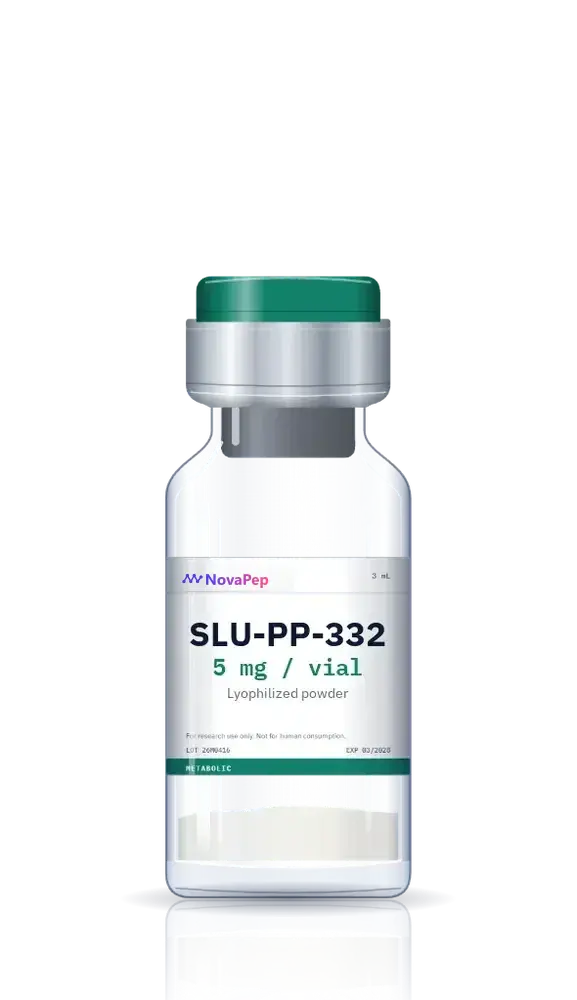
Buy SLU PP 332 Australia stock online from NovaPep as a 5 mg research vial or a bottle of capsules, tested on every lot. SLU-PP-332 is a synthetic small molecule, not a peptide, that activates every estrogen-related receptor subtype, alpha, beta and gamma. Published cell and mouse work uses it to study the gene programmes behind mitochondrial biogenesis and fatty acid oxidation. Its reference identity is C18H14N2O2, 290.3 g/mol and CAS 303760-60-3. We stock it in Australia as a 5 mg lyophilised vial or a 60 capsule bottle with 250 mcg in each capsule, both sent from local stock and found in our metabolic peptides range. Each lot is analysed by mass spectrometry and HPLC, and you can open the corresponding certificate of analysis before checkout. To compare a receptor pathway with a peptide pathway into mitochondrial biology, look at MOTS-c. The vial contains solid compound only, with no solvent supplied, and published cell work typically makes a DMSO stock first and then dilutes it. Store the unopened vial at -20 °C, and keep the capsule bottle sealed, dry and under 25 °C. Sold as a research reagent to adults 18 and over, strictly for laboratory use.
For laboratory research use only. Not for human or veterinary use. Not TGA approved. See the NovaPep research use policy.
SLU-PP-332 is a synthetic chemical that boosts the activity of three related proteins known as estrogen-related receptors, which tell cells to make more mitochondria and oxidise more fatty acids. It is often sold next to peptides and labelled the SLU PP 332 peptide, but it is actually a small aromatic compound that works by altering which genes a cell transcribes. You can order SLU-PP-332 online in Australia as a 5 mg research vial or a bottle of capsules, and every lot ships with its own certificate.
Chemically it is an acyl hydrazone, in which a 4-hydroxybenzoyl group connects through a hydrazone bond to a naphthalene ring. The molecule contains no amino acid chain, and its flat aromatic structure makes it hydrophobic, so it is much less soluble in water than most peptides.
The compound takes its name from Saint Louis University, where chemists collaborating with Thomas Burris and colleagues created the series. Its key papers have been published since 2023. They describe a molecule activating each of the three estrogen-related receptors, which turns on gene programmes similar to the muscle response to endurance training. That is why researchers frequently call it an exercise mimetic.
Most of the scientific interest comes from those receptors. Nuclear receptors are proteins that attach to DNA at specific response elements and turn transcription of nearby genes up or down. In 1988 Vincent Giguere and colleagues described the first two estrogen-related receptors in Nature after screening for sequences that looked like the estrogen receptor, and the name has been causing confusion ever since. Nobody has confirmed a natural ligand for them, so they are still classed as orphan receptors. Another unusual feature is that they are constitutively active. The binding pocket already holds an activating shape, and how strongly the receptor drives its target genes depends mostly on partner proteins, particularly the coactivator PGC-1 alpha.
Do not be misled by the receptor names. ERRs do not bind estrogen and are not estrogen receptors at all. They are orphan nuclear receptors that regulate fatty acid oxidation and mitochondrial biogenesis genes. NovaPep sells this product as a research reagent for investigating that regulation in cells and tissue models, with no connection to any medicine. Published research to date is preclinical, in mice and cell lines, and spans exercise capacity, metabolic stress and models of kidney and heart disease. Related tools are grouped in our mitochondrial peptides range.
The three subtypes are expressed in different places, so a pan-agonist has different effects from tissue to tissue. ERR alpha is plentiful in skeletal muscle, heart and brown fat, ERR gamma is concentrated in heart and kidney, and ERR beta is less common and found in a narrower range of tissues. A single compound acts on three receptors, and the subtype a particular cell expresses determines what your readout reveals.
Billon and colleagues from the Burris laboratory at Saint Louis University characterised the compound in a 2023 ACS Chemical Biology paper, reporting agonism at every estrogen-related receptor subtype, strongest at ERR alpha. Supplier data list EC50 values near 98 nM for alpha, 230 nM for beta and 430 nM for gamma. A structure-activity study of the scaffold was published in 2026. To date every efficacy study has relied on mice or cells, and no clinical trial has been reported. As of October 2026, no medicine in any country contains it, the Australian Register of Therapeutic Goods included. Labs planning similar studies can order SLU-PP-332 online in Australia, with identity and purity confirmed on every lot.
Our practical advice is to match each format here to a different kind of question. In cell experiments, measure the gene programme instead of the compound. Transcripts including PDK4, CPT1B and ESRRA shift within hours, while a Seahorse oxygen consumption trace or a count of mitochondrial DNA copy number provides a functional endpoint over several days. Hold the solvent concentration the same in every well, the vehicle control included, because a flat aromatic molecule like this can quietly fall out of aqueous medium and leave a dose series that no longer matches its labels. The point we stress most, explained alongside the mouse data in our full explainer on this ERR agonist, is that the lab that first developed the molecule has reported poor oral bioavailability. Studies designed around SLU-PP-332 capsules should therefore measure exposure directly instead of assuming it, since this format cannot be expected to deliver the compound as the injected preparations did in the published rodent work.
| Product | SLU PP 332 (CAS 303760-60-3) |
|---|---|
| Options | 5 mg vial, 60 capsules of 250 mcg |
| Structure or sequence | 4-hydroxy-N'-(naphthalen-2-ylmethylene)benzohydrazide, a small-molecule pan ERR agonist and not a peptide |
| Formula | C18H14N2O2 |
| Molar mass | 290.3 g/mol |
| CAS | 303760-60-3 |
| Format | Freeze-dried solid sealed in glass, or capsules supplied in a child-resistant bottle |
| Analysis | Mass spectrometry for identity and HPLC for purity, with vial and capsule lots analysed and certified independently |
| In the box | Either a solvent-free 5 mg vial or a 60 capsule bottle, 250 mcg per capsule (15 mg in total) |
| Storage | Unopened vial at -20 °C kept dry and dark, capsule bottle sealed, dry and under 25 °C |
| Stock | In stock |
| Intended use | In vitro laboratory research only |
The vial suits clean stock solutions, while the capsules give fixed solid units. Every lot of each format is tested before it is released.
This listing covers two quite different products. The vial, sealed glass under a green flip-off cap with a white label, contains only the 5 mg of solid compound. For the capsule option you get a white child-resistant capped bottle of 60 green and white capsules, each containing 250 mcg, for 15 mg in the whole bottle. The molecule is the same, but the lots and certificates are separate.
When checking the certificate, confirm a measured mass close to 290.3 g/mol, note which format the report covers and read the HPLC purity for that lot. Vial and capsule lots have separate reports in our COA library, each filed under the code on its own label.
With the vial, published cell studies dissolve the solid in DMSO to create a concentrated stock and then dilute it into culture medium. Putting 1 mL of solvent into the 5 mg vial yields a 5 mg/mL stock, about 17 mM, and our general dilution calculator converts any other volume. Use insulin syringes or calibrated pipettes for small volumes, and keep the final DMSO level low and identical across all arms, vehicle control included. Order SLU-PP-332 online in Australia and it travels by tracked Australia Post from our local stock.
Store the unopened vial at -20 °C somewhere dry and dark, and keep stock solutions cold in small aliquots. The capsule bottle does not need refrigeration, just a firmly closed lid, a dry shelf and a temperature under 25 °C, as moisture poses the biggest risk to a solid format.
When choosing a format, clean stock solutions call for the vial, while fixed solid units or the cheapest milligram call for the capsules, and our SLU-PP-332 capsules vs vial guide explains the trade-offs. When choosing a compound, note that MOTS-c is a peptide encoded by mitochondria that signals via AMPK, whereas this compound acts on nuclear receptors. Running both allows a single study to compare two different ways into the same mitochondrial programmes, and 5-Amino-1MQ, a small molecule aimed at an enzyme instead of a receptor, makes it a three-way comparison.
Pick the ERR agonist if you want to activate the estrogen-related receptors directly using a small molecule. Pick MOTS-c to investigate a peptide encoded by mitochondria that acts via AMPK. With both in one order, a single study can set a receptor route beside a peptide route into the energy programmes of mitochondria.
You will see it written as SLU-PP-332, SLU PP 332, SLUPP332 or SLU-PP 332, and chemical catalogues may list it by its systematic name or CAS 303760-60-3. Retailers frequently describe it as an SLU PP 332 peptide or an SLU-PP-332 peptide, although it contains no peptide bonds.
Its targets are ERR alpha, ERR beta and ERR gamma, also known by their gene names ESRRA, ESRRB and ESRRG. PGC-1 alpha, the co-activator these receptors partner with, comes up often in the same literature, and technical sheets sometimes shorten estrogen-related receptor agonists to ERR agonists or pan-ERR agonists.
Because no approved medicine contains it, research suppliers are the only source, which is why SLU-PP-332 for sale in Australia appears in reagent catalogues and not in pharmacies. NovaPep keeps the vial and the SLU-PP-332 capsules on Australian shelves for online purchase by adults 18 and over. It is meant only for in vitro research, never for use in humans or animals. If your lab is deciding whether to buy SLU-PP-332 in Australia as a new tool, our SLU-PP-332 research overview sets out the receptor background and every mouse study before you pick a format.
The 5 mg vial provides the pure compound without fillers, ready to dissolve to whatever concentration you need. It makes the better first purchase for cell or biochemical studies, where you will want to confirm solubility and activity in your own system.
The capsule bottle contains 60 units of 250 mcg, totalling 15 mg, so it works out cheaper per milligram than the vial. Every capsule is a pre-measured solid dose that needs no reconstitution, the same concept as our other peptide capsules. Where stock allows, buy multiple units of either format from the same lot so one certificate covers the full series. Checkout is open only to adults 18 and over.
All orders go through our website and ship from stock in Australia, so a lab in Darwin and a lab buying peptides in Geelong receive identical lots. Payment made before 3pm on a business day means the parcel is dispatched the same day, and shipping options are explained on the delivery information page.
Yes. Each lot, vial or capsule, is tested for identity by mass spectrometry and for purity by HPLC. You will find the certificates listed separately in our COA library, filed by the code on each label, so make sure the report you check matches the format you received.
A 290.3 g/mol synthetic small molecule that switches on ERR alpha, beta and gamma. It is neither a peptide nor an estrogen receptor ligand.
Choose the 5 mg vial or 60 capsules of 250 mcg. No solvent is supplied with the vial.
Studied for mitochondrial biogenesis and oxidative metabolism gene programmes in published cell and mouse work, and supplied for in vitro use.
A nuclear receptor agonist set next to a mitochondria-encoded peptide, offering two paths into the same energy programmes.
Keep the vial sealed in the freezer and stocks cold in aliquots, and keep capsules closed, dry and under 25 °C.
Vial lots and capsule lots each undergo mass spectrometry and HPLC, and every one has its own published certificate.
SLU-PP-332 is a synthetic acyl hydrazone developed at Saint Louis University. It activates all three estrogen-related receptors, strongest at ERR alpha. These orphan nuclear receptors work with the coactivator PGC-1 alpha to switch on fatty acid oxidation and mitochondrial biogenesis genes. It does not bind estrogen receptors.
No. Although many retailers list it among peptides, it is a synthetic small molecule, an acyl hydrazone of 290.3 g/mol containing neither amino acids nor peptide bonds. This chemistry is what allows a stable capsule format, and it is also why the vial requires a solvent such as DMSO to make stock solutions.
No. SLU-PP-332 is an unapproved research compound supplied for in vitro work only, so we give no dose for people or animals. For bench work, the peptide calculator turns the 5 mg vial and any diluent volume into mg per mL, while each capsule carries a fixed 250 mcg.
Nobody can say, because SLU-PP-332 has never been tested in people. The published work comes from cell culture and mouse models of estrogen-related receptor activation. With no human safety data, we make no claims about effects in people, and the compound is not for human or veterinary use.
For clean stock solutions at your chosen concentration, order the 5 mg vial, ideal for cell and biochemical studies. The 60 capsule bottle gives fixed solid units at the cheapest price per milligram. Our SLU-PP-332 capsules vs vial guide covers the trade-offs in greater depth.
Pick the 5 mg vial or the bottle of 60 capsules here and place it in your cart. Orders paid before the 3pm business-day cut-off leave Australian stock that same day. No solvent is included with the vial, and you can view the lot certificate before paying.
NovaPep
10 mg pen, 3 mL
 NovaPep
 NovaPep
2 mg vial
 NovaPep